
AI Should Be Lowering Your Epic Costs—And Your Vendors' Too
AI is changing the economics of knowledge work faster than almost any technology before it. Tasks that used to take an Epic consultant a week, an analyst a day, or a developer an afternoon are increasingly being done in a fraction of the time. For health systems under relentless margin pressure, that should be very good news.
But here's the question too few leaders are asking: when your Epic ecosystem gets faster and cheaper because of AI, where does that savings go? Too often, it disappears into vendor margin instead of yours. The same productivity revolution that's helping you do more with less should be doing the same thing to every Epic-related invoice you pay, from implementation services and optimization work to interfaces, add-on modules, upgrades, and support.
This is fundamentally a vendor strategy conversation. And the core principle is simple: even when Epic or an Epic-aligned vendor can do everything, you have to create just enough competitive pressure to keep pricing, service, and roadmap promises honest. Here are five ways to put that into practice.
1. Demand the AI dividend from everyone you pay
Your Epic implementation team, your consultants, your interface analysts, your custom developers, your app marketplace partners, and your optimization teams are all operating in a world where AI accelerates the work. If their people are getting more done in less time, that gain shouldn't quietly pad their margin. It should show up in faster delivery, fewer billable hours, fewer change-order surprises, and a lower total cost to you.
Make it an explicit question in every renewal and statement of work: How are you using AI to do this work faster and cheaper—and how is that reflected in my price? A vendor that can't answer is either behind the curve or keeping the upside for themselves. Either way, you've learned something useful.
2. Put AI efficiency expectations in writing
It's not enough to ask the question once. Bake the expectation into the contract. For Epic professional services, implementation work, module rollouts, integration builds, and optimization projects especially, that can mean tighter delivery timelines, reduced hours for well-understood tasks, clearer caps on change orders, and outcome-based milestones rather than open-ended time-and-materials billing.
The labor-hour model was built for a world where output scaled linearly with effort. AI breaks that assumption. If you're still paying consultants and analysts purely by the hour for work that AI now compresses, you're subsidizing a pricing model that no longer reflects reality.
3. Never let one vendor become a monopoly—even one that can do everything
The most dangerous position a health system can be in isn't paying too much for one tool. It's depending so completely on a single vendor that the vendor has no reason to sharpen its pricing, its service, or its roadmap. A vendor with no credible competition has no pressure to improve.
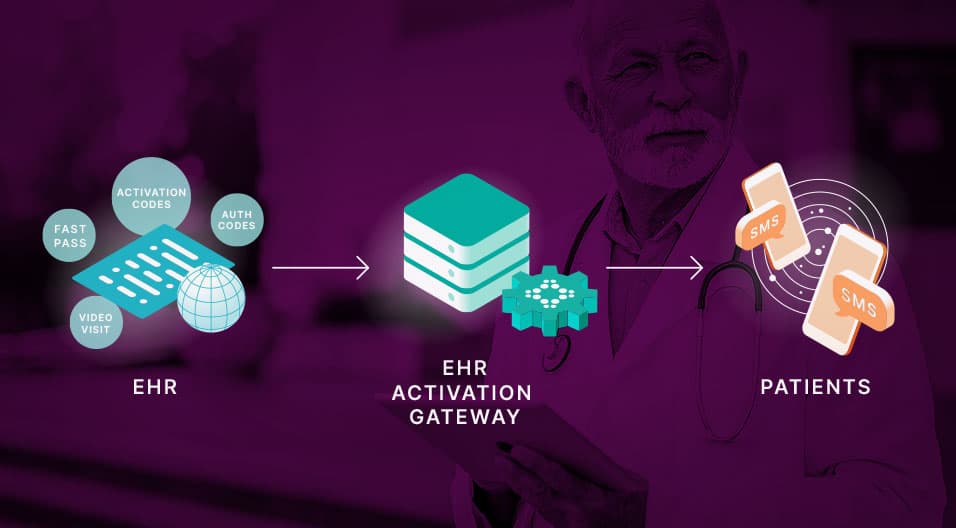
This is why an "Epic can do it all" stack, however convenient, deserves scrutiny. Maintaining a strong best-of-breed partner alongside your core EHR isn't redundancy—it's leverage. It creates the competitive tension that keeps the incumbent honest and gives you a real alternative when renewal time comes, especially for patient engagement workflows that sit around the EHR rather than inside the clinical chart. A focused patient-facing operating system that integrates with Epic and delivers Rounding, Outreach, and Self-Service is one example of how systems keep that tension alive while still consolidating overlapping point solutions.
4. Buy outcomes, not hours
Tie what you pay to what you actually get. As AI compresses the effort behind so much Epic-related vendor work, the fairest and most defensible way to structure a deal is around results—messages delivered, workflows automated, tickets deflected, hours given back to clinical staff, outcomes improved—rather than the time it took to produce them.
This protects you from paying for inefficiency, and it sorts the vendors who are genuinely creating value from the ones billing for activity. The partners worth keeping will welcome the conversation, because their value holds up when you measure it.
5. Watch the long-term cost curve—and beware the AI "cost bubble"
Some vendors will use AI the other way around: not to lower your costs, but as bait. Expect a wave of artificially cheap, AI-powered offers engineered to win the deal now and lock you in before prices climb. That risk is especially acute around Epic-adjacent workflows where data, integrations, staff habits, and governance processes become deeply embedded. The loss-leader pricing looks great in year one. The real cost shows up in years two through five—once switching is painful, the data is entangled, and the alternatives you might have kept around are gone.
So evaluate every Epic-related deal on its long-term cost curve, not its entry price. Ask what happens at renewal, how pricing scales as you add volume, users, sites, modules, or interfaces, and what it would actually take to leave. A solution that's cheap to get into but expensive to live in—or to exit—isn't a savings; it's a deferred bill.
The best hedge against the bubble is the same risk that keeps every other vendor honest: a credible ability to walk away. Maintaining a real alternative and building even modest internal AI fluency means you're never negotiating from dependence. When a vendor knows you can leave, the "cheap now" pricing has to stay reasonable later, too.
The bottom line
AI should be driving cost out of the entire Epic ecosystem—not just inside your own operations, but across the implementation, integration, optimization, and support work that surrounds the EHR. The leaders who benefit most won't be the ones who simply adopt AI internally. They'll be the ones who insist their Epic vendors and Epic-adjacent partners do the same, structure contracts around outcomes, watch the long-term cost curve instead of the entry price, and keep enough competitive tension in play that no partner—however capable—ever stops earning the business.
If you're paying Epic, demand this. And if you're rethinking which partners belong in your stack, let's connect.
Epic is a registered trademark of Epic Systems Corporation. CipherHealth is not affiliated with or endorsed by Epic Systems Corporation.